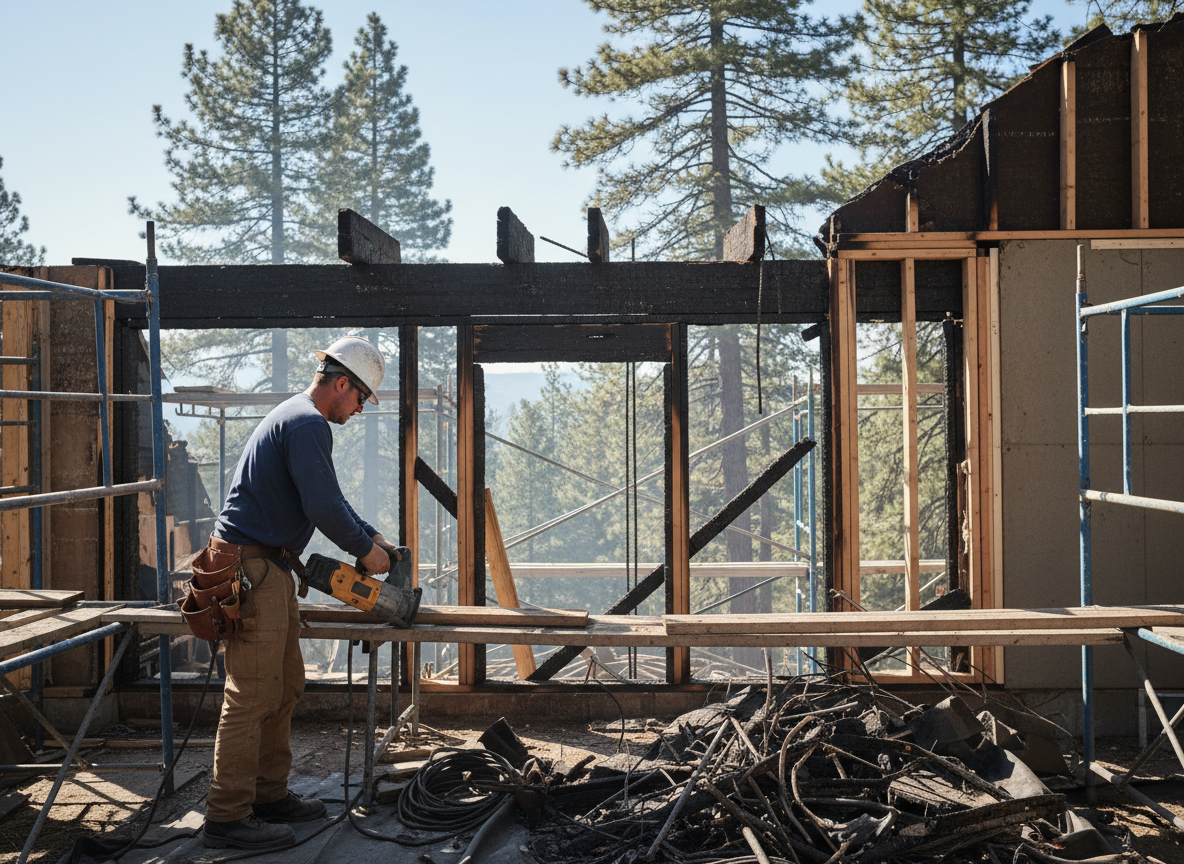
Blue Jay sits in San Bernardino County’s mountain zone where most homes are wood-frame cabins and A-frames built from the 1950s onward. After a fire, load-bearing posts, rim joists, and roof trusses often suffer hidden charring that only shows once finishes are removed. Winter snow loads add extra stress; any reduced cross-section in rafters can lead to sagging once heavy snow returns. We map every affected member against current county seismic and snow-load requirements before deciding whether sistering, full replacement, or engineered steel reinforcement is needed.
Ash and soot penetrate deep into untreated lumber and plywood sheathing common in older Lake Arrowhead and Running Springs cabins. Leaving residual acids behind causes ongoing corrosion of metal connectors and fasteners. During repair we remove all compromised material to sound wood, treat remaining surfaces with pH-neutralizing agents, and install new pressure-treated blocking where required. Edge cases include hidden knob-and-tube wiring runs inside walls that must be replaced to meet current electrical codes before drywall goes back up.
Terrain around Blue Jay often means steep driveways and limited equipment access. We stage steel beams and lumber via smaller trucks and hand-carry materials down slopes when larger equipment cannot reach the site. This adds time but prevents further soil disturbance on saturated mountain ground. Homeowners frequently discover that insurance adjusters initially under-scope the extent of structural damage; we document every charred joist and connection with photos and measurements so the scope can be revised before work begins.
Technician insight
In Blue Jay, the thing that catches most people out with structural repair after fire is how quickly snow load turns minor charring into a roof failure. Older cabins around Lake Arrowhead and Running Springs often have undersized rafters to begin with; once fire reduces their cross-section, a single heavy winter can cause collapse before homeowners realize the extent of the damage.
Charred Rim Joist on Steep Blue Jay Lot
A kitchen fire spread into the floor framing of a 1960s cabin on a steep slope above Highway 189. We found the rim joist and two floor joists heavily charred with hidden extension into the subfloor. After removing finishes we sistered new pressure-treated joists, added steel straps at the foundation connection, and treated remaining wood to neutralize acids. The floor was restored to full load capacity before the first snow.
How it works
- 1
Initial Structural Assessment
We inspect exposed framing, remove finishes as needed, and test load-bearing members for residual strength while documenting everything for insurance and county review.
- 2
Debris and Contaminated Material Removal
Burned wood, insulation, and fasteners are hauled away; surfaces are cleaned to stop acid corrosion before new lumber or connectors are installed.
- 3
Repair or Reinforcement
Sistering, full replacement, or steel reinforcement brings the structure back to code; all work accounts for San Bernardino County snow-load and seismic rules.
- 4
Final Inspection and Documentation
We walk the completed framing with the homeowner and provide photos and measurements for insurance closeout and any required county sign-off.
Pricing
Upfront written quotes based on actual damage found after finishes are opened; final cost depends on access, hidden damage, and county requirements.