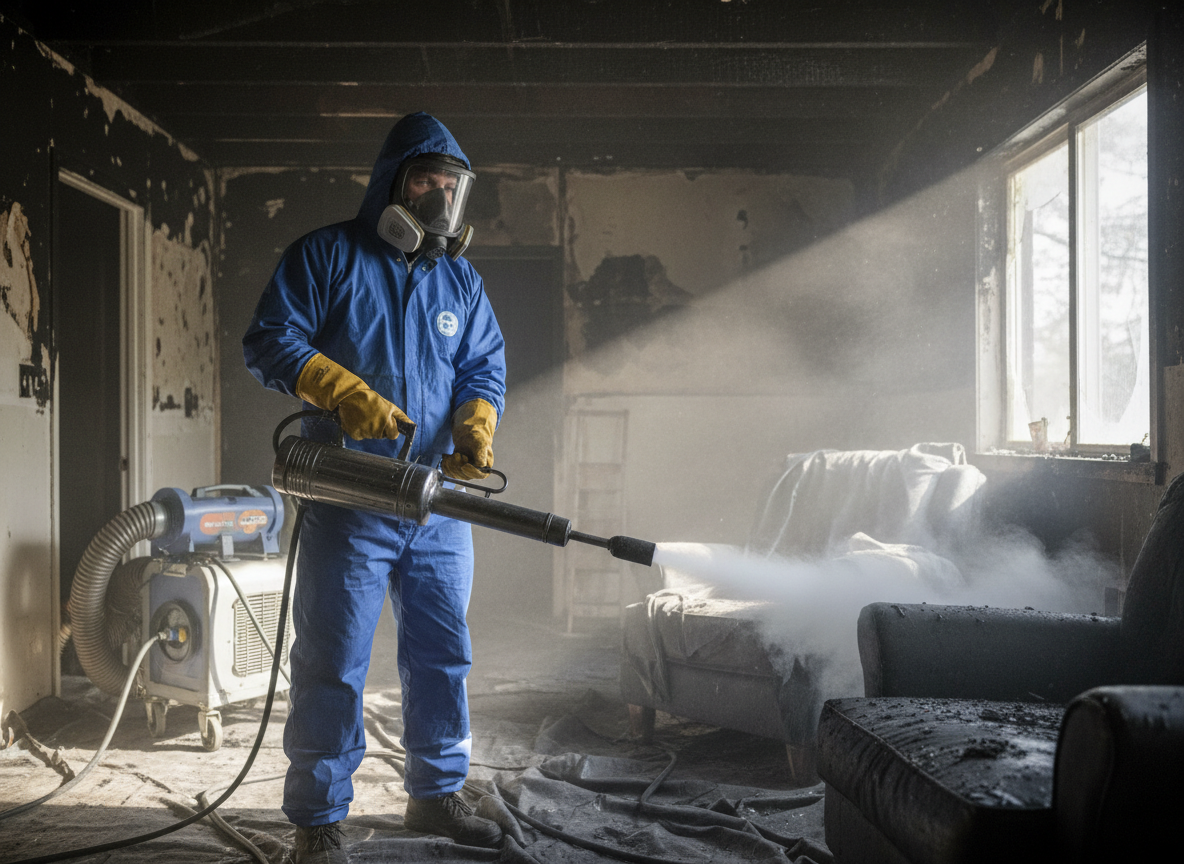
In the San Bernardino Mountains around Blue Jay and Lake Arrowhead, smoke from structure fires travels through older wood-frame cabins and settles into drywall, insulation, and attic spaces during cold winter nights when heating systems pull air inward. Warm summer days then cause trapped particulates to off-gas, creating lingering odors that standard cleaning misses. Our process starts with thermal imaging to locate hidden deposits in the layered construction common to homes built before modern fire codes tightened in Running Springs and surrounding ridges.
Porous materials like cedar siding and pine flooring absorb acidic smoke residues faster in this high-elevation climate where temperature swings between snowy winters and dry summers accelerate corrosion on metal fixtures and HVAC components. We use specialized HEPA air scrubbers and hydroxyl generators calibrated for low-oxygen mountain air to neutralize odors without introducing excess moisture that could freeze in winter. Every job includes sealing off affected zones to prevent cross-contamination into unaffected rooms, a step that becomes critical when homes sit on steep terrain with shared ventilation paths.
San Bernardino County building practices often leave gaps around chimneys and electrical penetrations that allow smoke to migrate into wall cavities during fires. We remove and replace contaminated insulation rather than attempting surface cleaning, then apply odor-sealing primers formulated for high-humidity conditions that occur when snowmelt raises local moisture levels. Homeowners in Blue Jay frequently discover that untreated smoke in subfloor areas reappears months later when heating resumes, so we document every cavity we treat with photos for insurance files.
Technician insight
In Blue Jay, the thing that catches most people out with smoke remediation is how the steep terrain and older cabin construction around Lake Arrowhead let smoke travel through shared attics and wall cavities during winter temperature inversions. Homeowners often clean visible surfaces only to have odors return when the first cold snap pulls air through those hidden paths again.
Hidden Soot in Blue Jay Cabin Attic
A fire in a neighboring property sent smoke into a 1970s Blue Jay home near CA-189. We found heavy soot deposits in the shared attic space and insulation that had migrated through gaps around the chimney. We contained the area, removed the contaminated insulation, and ran hydroxyl treatment for three days. The family returned to a home with no detectable odor even after the first winter heating cycle.
How it works
- 1
Initial Assessment
We arrive 24/7 at your Blue Jay property and use detection equipment to map smoke migration through walls, attics, and HVAC systems common in Lake Arrowhead-area homes.
- 2
Containment Setup
Plastic barriers and negative air machines isolate affected zones so soot does not spread into clean areas during remediation work on older mountain construction.
- 3
Soot Removal
HEPA vacuums and chemical sponges lift residues from surfaces while we extract embedded particles from porous wood and drywall found in Blue Jay cabins.
- 4
Odor Neutralization
Hydroxyl generators and sealing primers eliminate remaining smells that re-emerge during snowy winters when homes are closed up tight.
- 5
Final Clearance
Air quality testing confirms safe levels before we remove equipment and provide documentation for your San Bernardino County insurance claim.
Pricing
Cost depends on square footage affected, depth of smoke penetration into older mountain homes, and whether HVAC or insulation replacement is required.