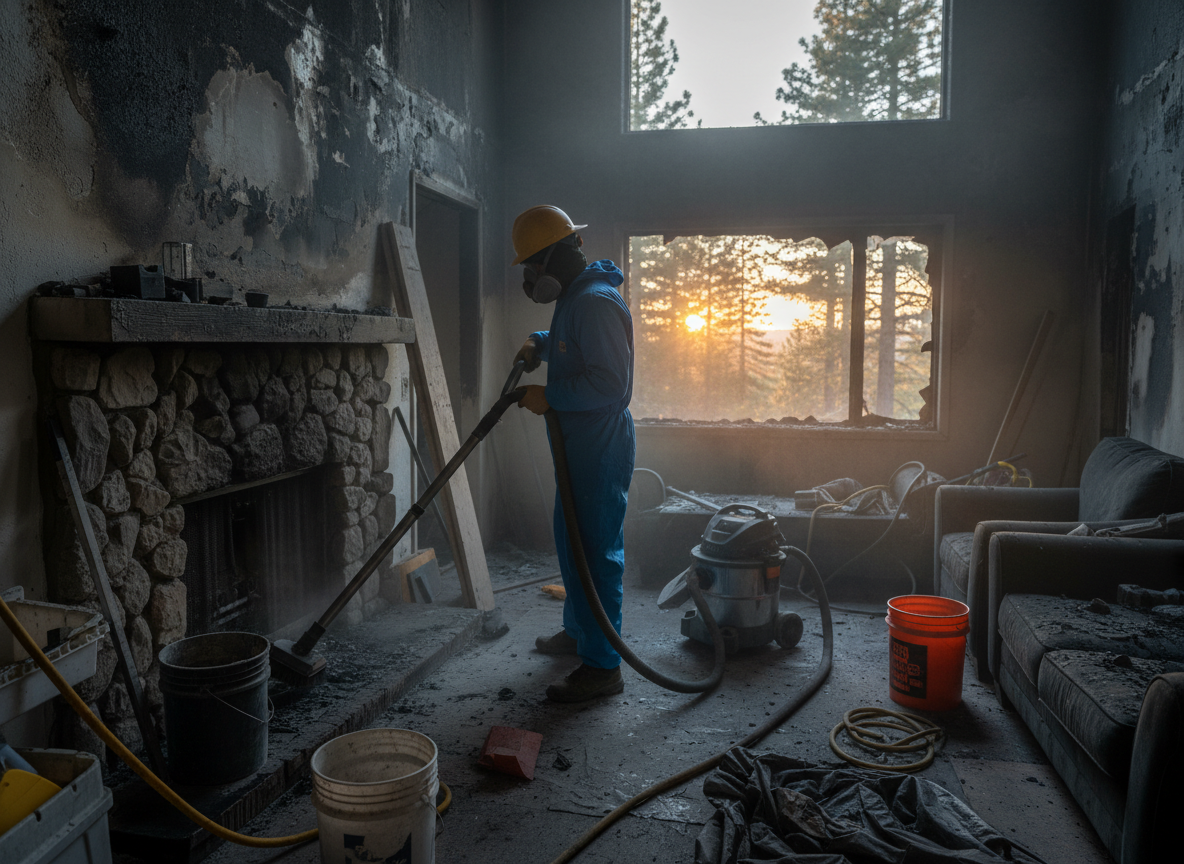
Fire damage clean up in Blue Jay requires careful handling of soot that settles into the older wood-framed homes common throughout San Bernardino County. Ash from wildfires often mixes with the fine dust from pine needles and cabin siding, creating a residue that bonds quickly to surfaces. In homes near Lake Arrowhead, firefighters frequently use water that later freezes during snowy winters, locking contaminants into floors and insulation. Technicians must test for hidden migration into HVAC systems before any cleaning begins, or odors will return once heat is turned on.
Mountain terrain around Blue Jay adds extra steps during clean up. Steep driveways and narrow roads near Running Springs limit equipment access, so crews stage smaller tools and containment barriers on site. Warm summer days can cause rapid drying that sets stains, while winter snow requires tarps and dehumidifiers to prevent moisture from re-soaking charred materials. Crews document every layer removed so homeowners can see exactly what was affected and what remains.
Edge cases include properties where smoke traveled through shared walls in clustered cabins. These situations demand separate negative-air setups for each unit to avoid cross-contamination. Residue on metal roofing and gutters also needs attention because runoff can stain decks below once snow melts. All work follows local San Bernardino County guidelines for disposal of contaminated debris, keeping the job compliant without unnecessary delays.
Technician insight
In Blue Jay, the thing that catches most people out with fire damage clean up is how winter snow freezes soot into wood floors and insulation near Lake Arrowhead, so what looks clean in January can off-gas once the first warm spell hits and the house is closed up again.
Soot in a Running Springs-Adjacent Cabin
Heavy smoke from a nearby fire entered a Blue Jay cabin through attic vents during a snowy week. Water used by crews froze on subfloors, locking ash into the pine boards. Crews set up containment, thawed and extracted the residue, then ran air scrubbers until readings cleared. The homeowner returned to a space free of lingering odor.
How it works
- 1
Site Walk-Through
Technicians inspect every room, attic, and crawl space to map soot migration and water intrusion from suppression efforts.
- 2
Containment and Air Scrubbing
Plastic barriers and HEPA filtration isolate affected zones while removing airborne particles before cleaning starts.
- 3
Surface Cleaning and Extraction
Specialized agents lift soot from wood, drywall, and fabrics; frozen residues from winter conditions receive extra dwell time.
- 4
Final Clearance Testing
Air and surface samples confirm odors and particles are below acceptable levels before contents are returned.
Pricing
Pricing varies by square footage affected, depth of soot penetration, and whether winter conditions complicate access; upfront quotes given after inspection.