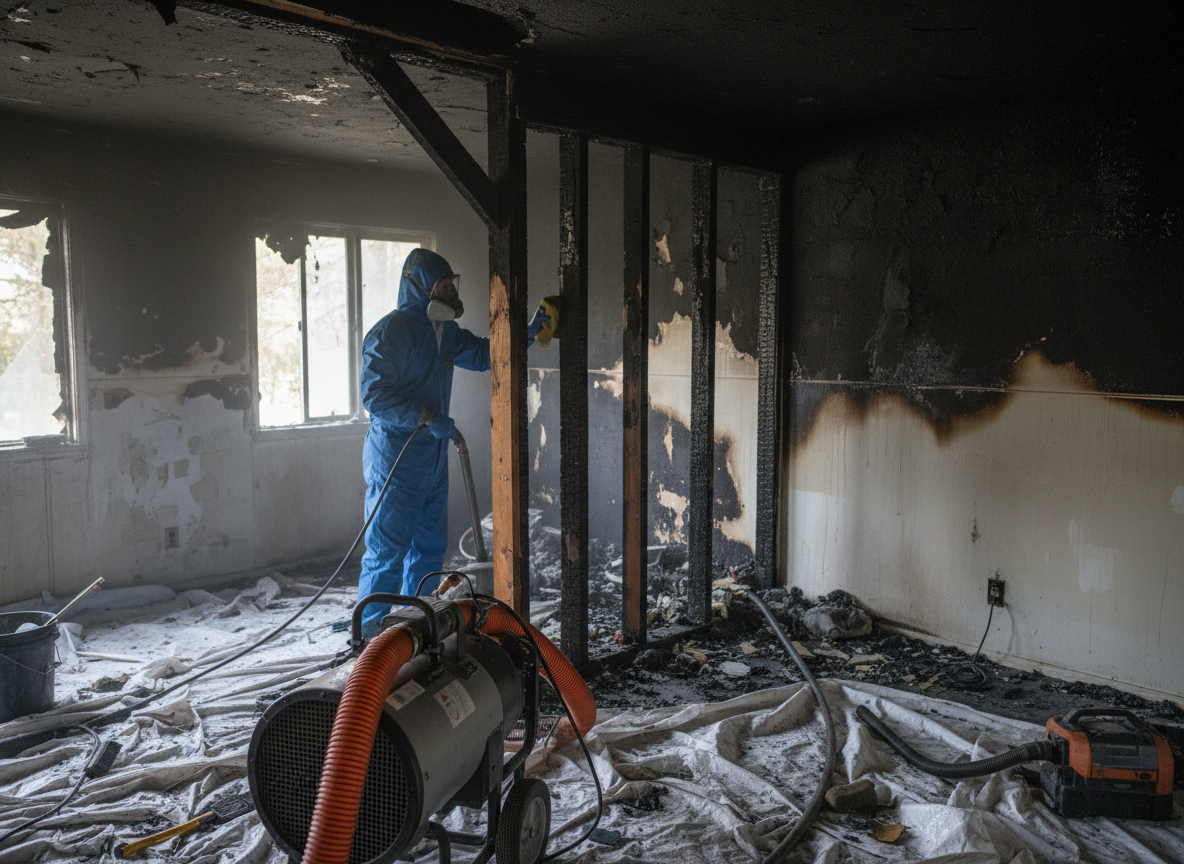
Smoke from fires in the San Bernardino National Forest area travels quickly through Blue Jay's older cabin-style homes and settles into porous materials like pine paneling and insulation common in properties built before the 1980s. Warm summer days can reactivate odors while snowy winters keep windows sealed, trapping particulates that standard cleaning misses. Restoration requires removing affected drywall sections, treating HVAC systems that run continuously in mountain conditions, and using thermal fogging to neutralize residues in hard-to-reach spaces between logs and under floors.
In Running Springs and Lake Arrowhead-adjacent neighborhoods, alkaline soot from burning wood and synthetics corrodes metal fixtures and discolors fabrics faster than in drier climates. Technicians test pH levels on surfaces before applying neutralizers and often replace carpet padding that has wicked in odors from below. Homeowners sometimes attempt ozone machines without addressing the source, which only masks problems until the next temperature swing.
Restoration follows IICRC guidelines adapted for mountain terrain where steep driveways and limited access slow equipment delivery. Crews stage at the 27264 CA-189 location for rapid response during winter storms when roads to Blue Jay can close. Every job includes documenting hidden damage behind baseboards and in attics where smoke rises and collects during the initial burn.
Final clearance testing checks for lingering VOCs that become noticeable once heating systems kick on in November. This step prevents callbacks common when only visible surfaces are addressed in homes with multiple levels and cathedral ceilings typical around Lake Arrowhead.
Technician insight
In Blue Jay the thing that catches most people out with smoke damage restoration is how quickly residues set into the pine interiors and underfloor spaces of pre-1970 cabins once winter heating starts. Snow keeps everything closed up so odors that seemed gone in summer return fast if the source behind the drywall isn't pulled.
Hidden Soot in Lake Arrowhead Road Cabin
A kitchen fire sent smoke through the single-story home near CA-189. Inspection found heavy residue in the attic and under the original hardwood floors. Crews removed affected insulation, cleaned all surfaces, and treated the HVAC before winter. The family returned without recurring odors after the first cold snap.
How it works
- 1
Initial Assessment
Inspect all affected rooms, test surfaces for soot type, and map odor migration paths through the home's layout in Blue Jay's hilly terrain.
- 2
Source Removal
Remove charred materials and heavily contaminated insulation or drywall that continues to off-gas in sealed winter conditions.
- 3
Deep Cleaning
Apply pH-balanced cleaners to walls, ceilings, and contents followed by thermal fogging to reach crevices in older mountain construction.
- 4
Odor Neutralization and Testing
Run air scrubbers and verify clearance with meters before returning the property for normal use.
Pricing
Pricing varies by square footage affected, soot type, and whether HVAC cleaning or contents processing is required.