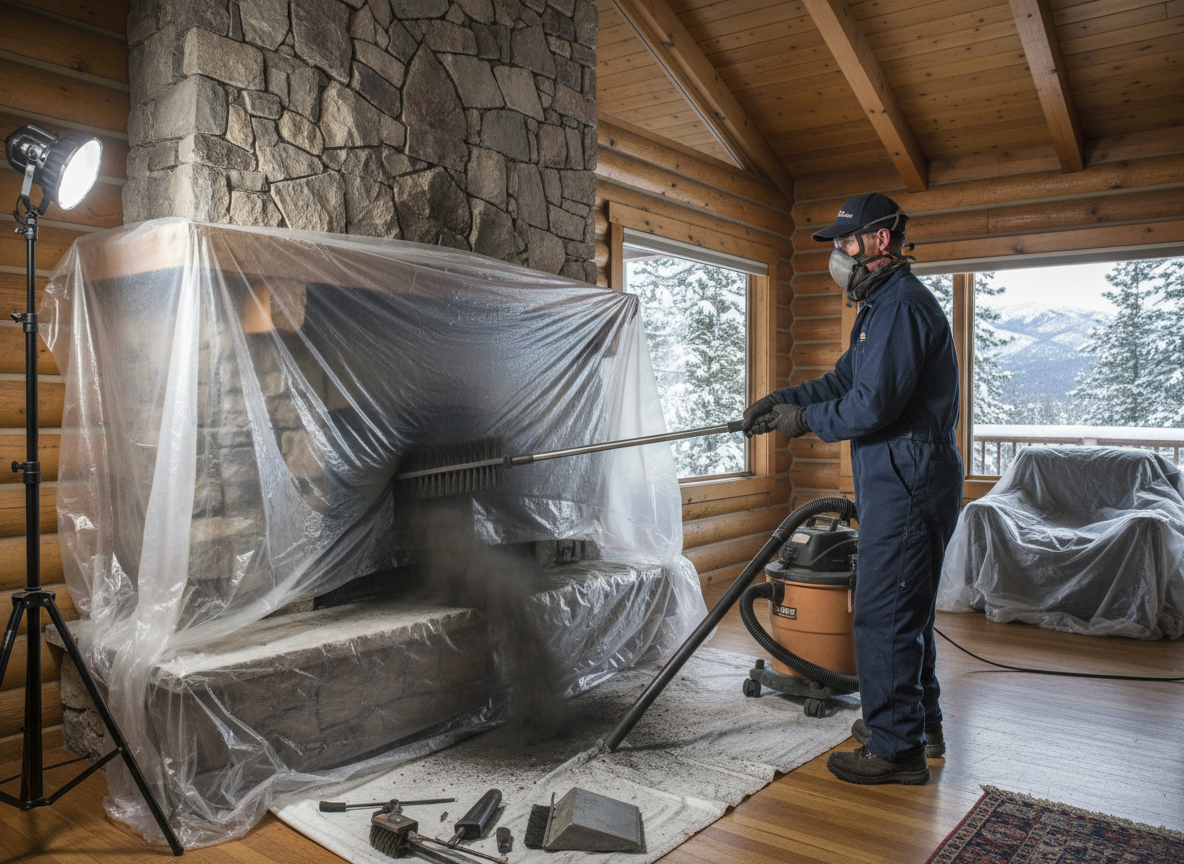
Soot from structure fires in Blue Jay often settles into the textured wood paneling and older plaster common in San Bernardino County cabins built before the 1970s. These porous surfaces hold fine particles that standard vacuuming leaves behind, allowing odors to return when winter humidity rises. Technicians use negative-air machines and HEPA filtration to capture particles without redistributing them into adjacent rooms near Lake Arrowhead.
Mountain temperature swings between warm summer days and freezing nights cause condensation on metal ductwork and stone fireplaces, bonding soot to those surfaces. In Running Springs and Blue Jay, crews test pH levels on affected drywall and concrete before choosing alkaline or solvent-based cleaners that won't etch finishes. Skipping this step risks permanent staining once snowmelt increases indoor moisture.
Access to second-story lofts and steep driveways in the area limits equipment size, so technicians rely on portable agitation tools and spot treatments rather than large truck-mounted units. Electrical wiring in pre-1980 homes can hide soot inside junction boxes, requiring removal of cover plates for proper cleaning to prevent future arcing hazards.
Final verification includes white-cloth wipe tests on multiple surfaces and odor checks after the home has been closed overnight, matching the conditions residents face during snowy winters.
Technician insight
In Blue Jay, the thing that catches most people out with soot removal is how quickly winter snowmelt drives moisture into wall cavities and re-activates odors from soot left in older knob-and-tube wiring runs. Homeowners often try wiping visible surfaces themselves, pushing fine particles deeper into the textured ceilings typical of 1960s cabins around Lake Arrowhead.
Soot in a Blue Jay Cabin After Fireplace Failure
A homeowner in Blue Jay reported heavy soot throughout the living area after a fireplace flue issue during a cold snap. Inspection found particles lodged in the tongue-and-groove ceiling and inside the forced-air ducts serving the upper loft. Crews isolated the HVAC, performed staged dry cleaning, then treated the wood surfaces before restoring airflow.
How it works
- 1
Initial Assessment
Inspect all rooms, attics, and HVAC systems for soot migration patterns specific to Blue Jay's hillside homes.
- 2
Containment Setup
Isolate affected zones with plastic barriers and negative pressure to keep particles from reaching unaffected areas near Lake Arrowhead.
- 3
Particle Removal
Apply HEPA vacuums and dry sponging to wood, plaster, and fabric surfaces before any moisture is introduced.
- 4
Surface Cleaning
Use pH-adjusted solutions on hard surfaces and test for residue that could react with winter condensation.
- 5
Verification and Odor Check
Perform wipe tests and run the HVAC to confirm no re-soiling occurs after the system cycles.
Pricing
Pricing varies with the number of affected rooms, surface types, and access challenges common in mountain terrain.