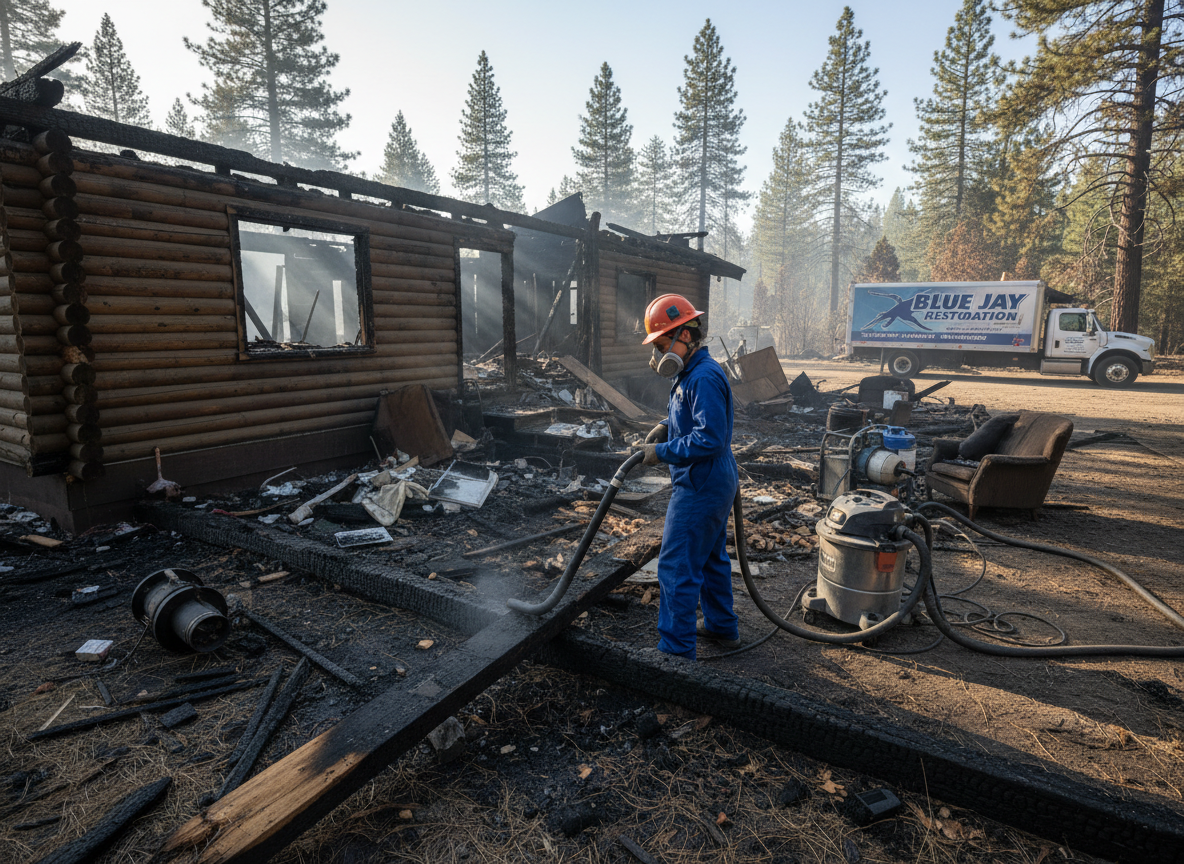
Fires in Blue Jay often start from woodstove issues or lightning in the surrounding San Bernardino National Forest and quickly affect older single-story cabins with cedar siding and shake roofs common around Lake Arrowhead. Soot travels through the open beam construction typical of these homes and settles into insulation and ductwork, requiring removal of affected material rather than surface cleaning alone. Winter snowpack adds weight to already compromised roofs while meltwater can carry acidic residue into crawl spaces, creating secondary corrosion on metal fasteners and wiring.
After initial suppression by Cal Fire crews, residual heat in wall cavities around Running Springs properties can re-ignite if not cooled and monitored during the first 48 hours. Ash from pine and manzanita burns at higher acidity levels than urban fires, etching glass and metal fixtures within days if humidity rises during spring thaw. Technicians must account for steep driveways and limited equipment access on narrow mountain roads when staging negative air machines and dehumidifiers.
Structural drying follows EPA guidelines for microbial growth prevention once power is restored, but Blue Jay's variable mountain climate means daytime warming can push moisture back into cooler attic spaces overnight. Contents cleaning separates hard goods from porous items like area rugs and upholstered furniture that absorb smoke odors from both the fire and any suppression foam used. Final clearance testing includes visual inspection plus odor checks before homeowners return, especially important in rental cabins that see heavy seasonal use.
Technician insight
In Blue Jay, the thing that catches most people out with Emergency fire damage restoration is how winter snow load on older roofs around Lake Arrowhead hides char damage until spring melt starts dripping acidic water through ceiling joists into living spaces.
Post-Fire Soot In Lake Arrowhead Cabin
A kitchen fire spread smoke through the open ceiling of a 1970s cabin near Running Springs. Inspection revealed soot lodged in fiberglass batts and along roof decking under snow-covered shingles. Crews removed affected insulation, cleaned ducts, and dried meltwater intrusion before reinstalling finishes.
How it works
- 1
Site Assessment
Walk the property with the homeowner to document visible char, smoke migration paths, and any water introduced during suppression, noting terrain slope and snow conditions.
- 2
Containment And Safety
Set up barriers to prevent soot cross-contamination, secure unstable structures, and establish safe access routes around snow-covered driveways.
- 3
Soot And Odor Removal
Apply pH-adjusted cleaners matched to the acidic ash from local vegetation, followed by air scrubbing and odor neutralization in ductwork and insulation.
- 4
Drying And Monitoring
Deploy equipment to remove moisture from snow melt and suppression water while tracking humidity levels through daily readings until readings stabilize.
- 5
Restoration And Clearance
Replace removed materials, perform final cleaning, and conduct walkthrough with homeowner to confirm no lingering odors or hidden damage.
Pricing
Upfront quotes provided after inspection; final cost depends on square footage affected, depth of smoke penetration, and any water introduced during firefighting.