2026-10-16 ·
How to Clear Ash and Soot from Blue Jay Cabins After Regional Fires
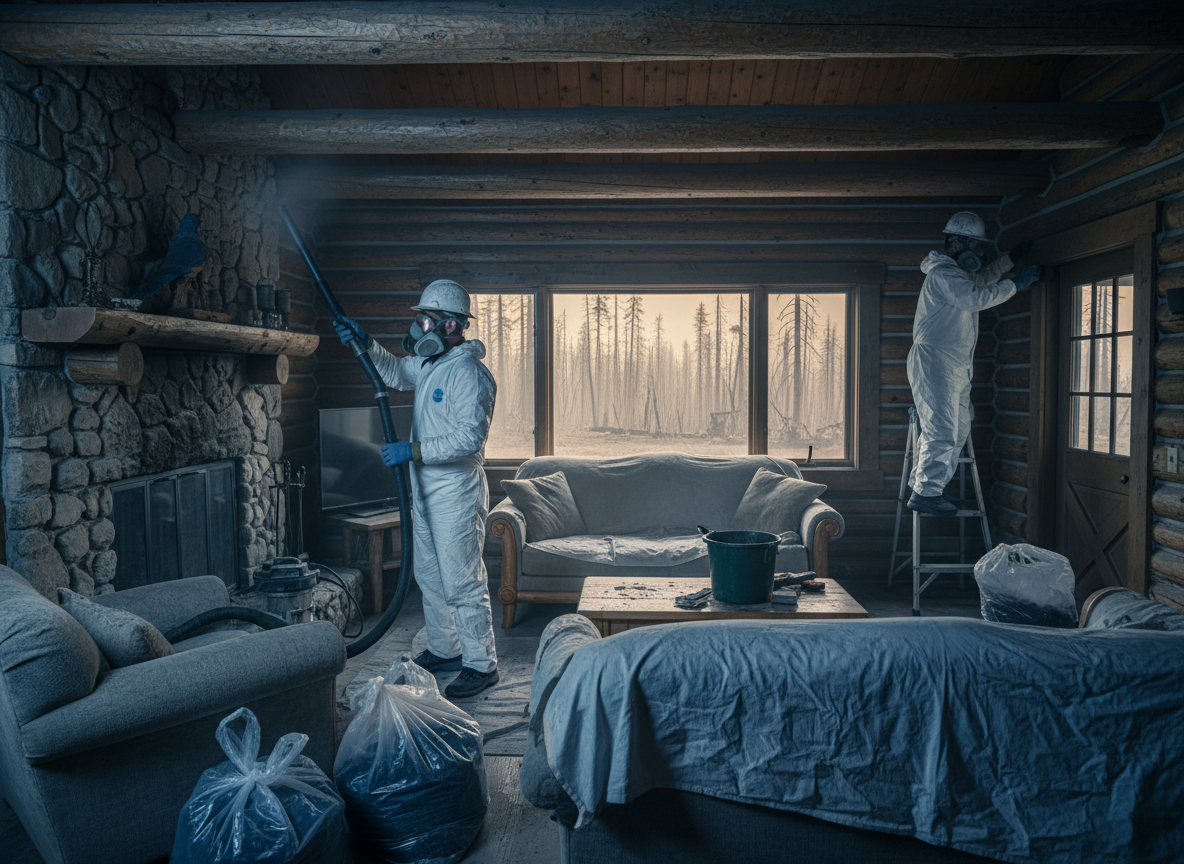
Clearing ash and soot from Blue Jay cabins begins with thorough dry removal before any moisture is introduced, followed by HEPA vacuuming and repeated surface wiping using degreasing agents matched to the soot type. Regional fires often send fine particles into attics and wall cavities of older log and wood-frame cabins common around Lake Arrowhead and Running Springs. Snowy winters here slow evaporation, so any water-based cleaning must wait until temperatures allow proper drying to avoid trapped moisture that leads to mold.
Assessing Soot and Ash Deposits in Mountain Cabins
Start by inspecting all surfaces under bright lighting, paying special attention to horizontal ledges, HVAC returns, and the spaces between logs where ash settles in Blue Jay cabins built decades ago. Smoke from fires in the San Bernardino National Forest tends to produce both dry powdery ash and oily soot that bonds to unfinished wood. Document layers on ceilings and inside cabinets before disturbing anything. Cabins near Lake Arrowhead often have steeper rooflines that trap more airborne particles during wind-driven events. Check insulation in attics, as compressed fiberglass holds residue that later releases during warmer summer months. This initial survey determines whether dry methods alone suffice or if additional steps are needed for crevices typical in older mountain construction.
Safety Steps Before Starting Removal Work
Wear N95 respirators and disposable coveralls when disturbing ash in Blue Jay properties, because fine particles from regional fires can contain metals and chemicals that irritate lungs during the dry winter air. Turn off HVAC systems immediately to prevent spreading soot through ducts common in cabins around Running Springs. Seal off unaffected rooms with plastic sheeting and tape to contain dust. Test surfaces for pH before choosing cleaners, since alkaline ash from forest fires reacts differently with acidic solutions. Keep a supply of microfiber cloths and shop vacuums with multi-stage filtration on site, as repeated passes are required in high-elevation homes where low humidity keeps particles airborne longer.
Dry Cleaning Methods That Work in Snowy Conditions
Use HEPA vacuums with brush attachments first on all flat surfaces, moving in one direction to avoid re-depositing ash inside Blue Jay cabins. Follow with dry chemical sponges on walls and ceilings, wiping in straight lines and flipping the sponge frequently. For upholstery and curtains, vacuum with upholstery tools then gently brush with soft bristles before any liquid treatment. Winter snow around Lake Arrowhead means outdoor drying of textiles is unreliable, so plan indoor spaces with fans and dehumidifiers once temperatures rise above freezing. Repeat vacuuming after each sponge pass until cloths show no transfer. These steps reduce visible residue before moving to any wet cleaning that could set stains in wood typical of local cabins.
When Professional Soot Removal Becomes Necessary
Persistent gray film on light fixtures or odors that return after airing out indicate embedded soot requiring specialized equipment beyond homeowner tools. In remote Blue Jay locations, access roads can close during snowy periods, extending the time ash remains undisturbed. Handling lingering smoke odors in Blue Jay homes during cooler months explains how temperature swings affect residue behavior. For cavities behind paneling or in crawl spaces common to mountain homes, soot removal technicians use air scrubbers and thermal fogging matched to the soot chemistry found after San Bernardino County fires. What affects the timeline for fire damage restoration in remote Blue Jay properties outlines seasonal factors that influence drying and cleaning schedules in this terrain.