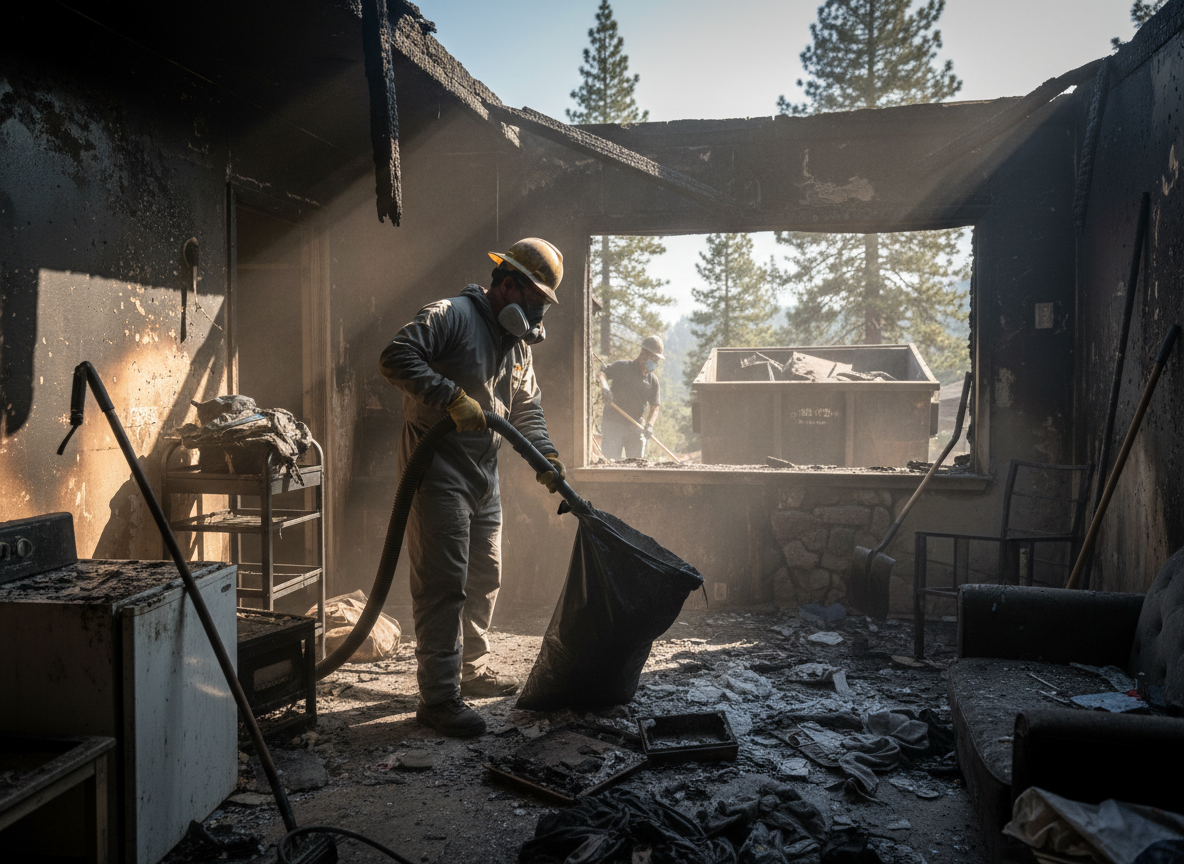
Tenant fire damage cleanup in Blue Jay requires careful separation of landlord and renter responsibilities, especially in older cabins and A-frame homes common around Lake Arrowhead and Running Springs. Smoke and soot penetrate pine-paneled walls and attic spaces more readily than in newer construction, leaving acidic residues that corrode wiring and HVAC systems if not neutralized within days. Winter snow loads can trap moisture in ceilings after a fire, turning hidden soot into mold once temperatures rise in spring.
Restoration crews address contents separately from structure because tenant belongings often lack the same coverage as the building itself. Crews use HEPA air scrubbers and negative air machines sized for the smaller square footage of mountain rentals while documenting every item for insurance adjusters. In San Bernardino County, local fire codes require updated smoke detector placement after any incident, so technicians coordinate with property managers to bring units into compliance before reoccupancy.
Edge cases arise when fires start in wood-burning stoves or from faulty propane lines, common in Blue Jay homes built before the 1980s. These events leave heavy creosote and petroleum-based soot that demands different pH-neutral cleaners than typical residential fires. Crews also check crawl spaces for ash migration, since steep terrain around CA-189 funnels water flow that can carry residues into foundations during snowmelt.
Technician insight
In Blue Jay, the thing that catches most people out with tenant fire damage cleanup is how snowmelt from the surrounding San Bernardino peaks seeps through older cabin roofs after a winter fire, carrying soot into insulation that then needs full removal rather than surface cleaning.
Lake Arrowhead Road Rental Fire
A kitchen fire in a 1970s cabin on the north shore spread soot through the open-beam ceiling into the upstairs bedroom. We found heavy creosote residue mixed with melted insulation. Crews removed affected drywall and insulation, cleaned all surfaces, and stored the tenant's furniture off-site until the landlord completed roof repairs.
How it works
- 1
Initial Assessment and Containment
Technicians arrive within hours, secure the unit, and set up containment to prevent soot spread to unaffected rental spaces.
- 2
Contents Inventory and Removal
All tenant belongings are catalogued, photographed, and moved to an off-site facility for cleaning or disposal per insurance guidelines.
- 3
Structural Cleaning and Odor Removal
Walls, ceilings, and HVAC systems receive specialized soot removal followed by ozone or hydroxyl treatment to eliminate smoke odors.
- 4
Final Clearance and Handover
Air quality testing and walkthrough with the property manager confirm the unit meets habitability standards before tenants return.
Pricing
Upfront quotes based on square footage, soot density, and contents volume; seasonal snow access can affect scheduling.