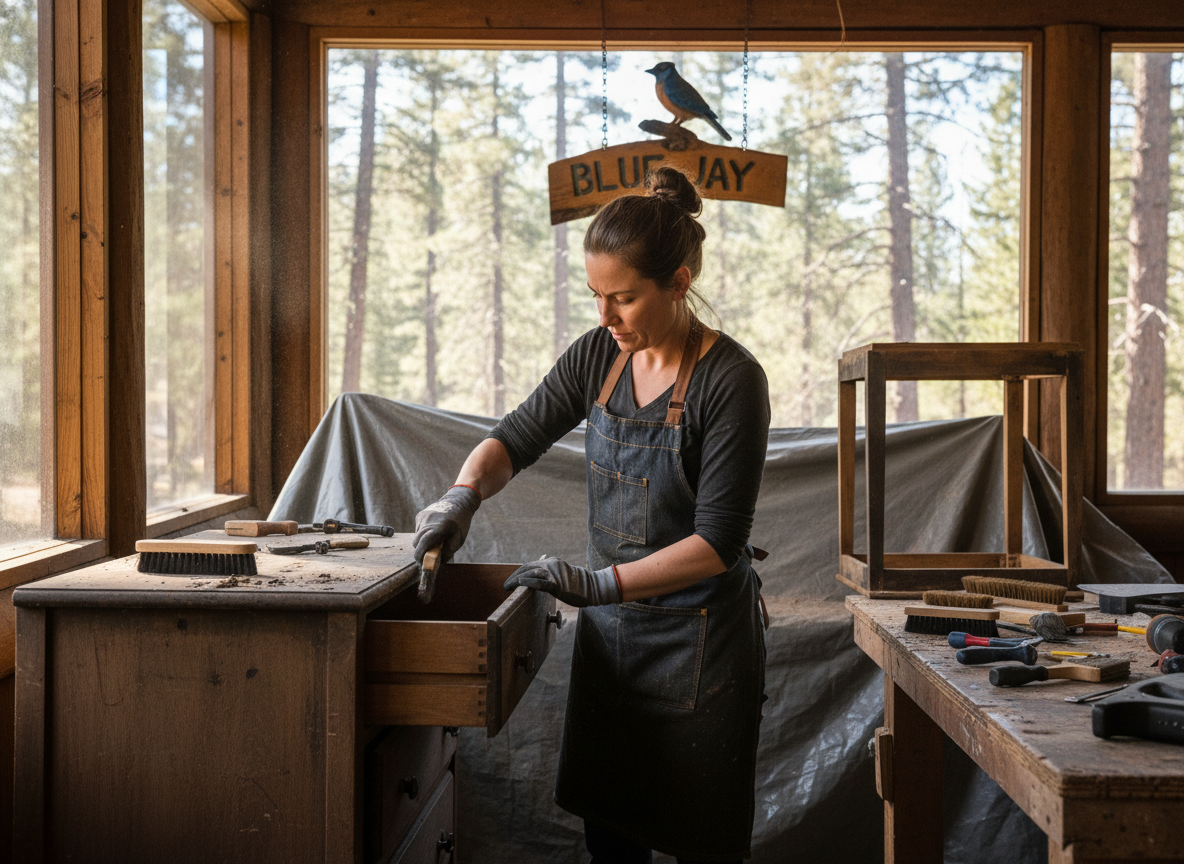
Fire-damaged furniture in Blue Jay often suffers from heavy soot layers that penetrate porous woods and fabrics common in older cabins around Lake Arrowhead and Running Springs. Warm summer days followed by snowy winters create repeated expansion and contraction cycles that drive smoke residues deeper into joints and upholstery padding. Restoration begins with careful disassembly to reach hidden pockets, followed by pH-balanced cleaning agents chosen for the specific wood species or fabric type. Homeowners in San Bernardino County frequently overlook how mountain humidity swings after a fire can cause warping if pieces are not stabilized quickly.
Upholstered items near Lake Arrowhead require separate handling because foam and batting trap odors that re-release when winter heating systems run. We isolate and treat frames first, then replace or clean cushions using methods that avoid shrinking or color loss. Solid wood pieces from older Blue Jay homes may show surface charring that stops short of structural failure; these surfaces can be sanded and refinished only after confirming the adhesive in any veneer remains sound. Electrical components in recliners or entertainment centers must be removed before cleaning to prevent corrosion from residual acids in soot.
Storage during the restoration process matters because Blue Jay winters bring freezing nights that can crack finishes on pieces left in unheated garages. We keep items at stable indoor temperatures at our CA-189 location until delivery. Edge cases include water rings from firefighter suppression efforts that combine with smoke to create permanent staining on tabletops; these require multiple solvent passes rather than simple sanding. Final inspection checks for lingering odors using the same heating patterns homeowners will use once the piece returns.
Technician insight
In Blue Jay, the thing that catches most people out with fire-damaged furniture restoration is how tightly sealed cabins during snowy winters let smoke particulates migrate into every wood pore and fabric layer; once temperatures rise again the odors bloom back unless the pieces were disassembled and treated while cold.
Soot-Penetrated Dining Set Near Lake Arrowhead
A Blue Jay homeowner called after a kitchen fire left a solid oak table and chairs coated in greasy soot. We found residues had wicked into the grain and under the finish during the cold weeks the house stayed closed. After disassembly, multiple solvent baths and refinishing we returned the set with matching color and no odor, ready for normal winter use.
How it works
- 1
Initial Assessment
Inspect each piece on site in Blue Jay for structural integrity, soot depth and odor penetration while noting wood species and fabric types.
- 2
Disassembly and Pre-Cleaning
Remove cushions, hardware and drawers; vacuum loose soot using HEPA equipment to prevent cross-contamination inside the home.
- 3
Deep Cleaning and Odor Removal
Apply appropriate solvents and deodorizers to frames and upholstery, then use controlled ozone or thermal fogging when needed.
- 4
Repair and Refinishing
Stabilize joints, sand charred areas, match stains and apply protective coatings suited to mountain temperature swings.
- 5
Reassembly and Return
Reinstall hardware, test moving parts and deliver the restored furniture once indoor conditions match the home's normal climate.
Pricing
Pricing varies by item count, material type and damage severity; we provide detailed assessments before any work begins.