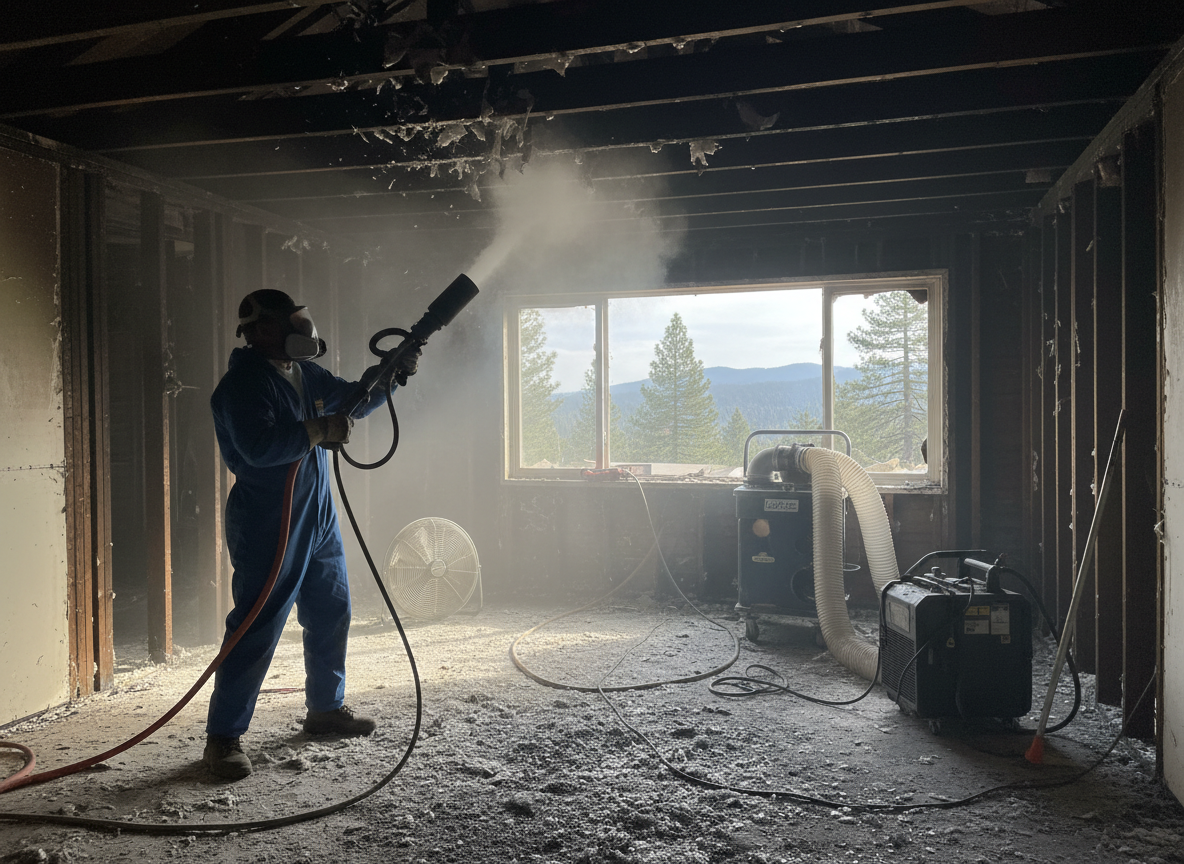
Blue Jay sits in San Bernardino County at elevation where winter snow loads and freeze-thaw cycles can drive hidden moisture into fire-weakened framing. After a structure fire, crews must open wall cavities and check roof sheathing because meltwater from accumulated snow often migrates into charred joists and creates secondary mold growth weeks later. Older cabins along CA-189 frequently have balloon framing and limited access, so negative-pressure containment and HEPA air scrubbing must be staged on sloped lots to keep soot from drifting into neighboring properties.
Warm summer afternoons bring low humidity and high winds that carry smoke deeper into insulation and HVAC ducts. Restoration teams in Running Springs and Blue Jay therefore pull registers, clean or replace ductwork, and fog with thermal foggers rated for porous wood surfaces common in 1960s-1980s mountain builds. Charred plywood subfloors must be evaluated for delamination before any finish work; otherwise residual odors return once heating systems cycle during the first cold snap.
Ash and soot on Lake Arrowhead-area properties often contain resins from local conifers, making pH-neutral cleaning agents necessary to avoid etching hardwood floors or damaging cedar siding. Crews document every layer removed so insurance adjusters see the progression from visible char to hidden smoke residue in attic spaces that are difficult to reach without disturbing snow-covered roofs.
Final clearance testing in these mountain homes includes both air sampling and surface swab tests because cold temperatures slow off-gassing; odors that seem gone in summer can reappear once furnaces run. Homeowners are advised to keep portable dehumidifiers running through the first winter to prevent moisture from re-entering any remaining porous materials.
Technician insight
In Blue Jay the thing that catches most people out with fire damage restoration near me is how quickly snowmelt finds charred roof decking. Older homes along the 189 corridor often have single-layer roofs; once you open them you discover water already sitting in the insulation even though the fire was weeks earlier.
Smoke in Attic After Kitchen Fire
A Blue Jay cabin near Lake Arrowhead suffered a kitchen fire that sent smoke into the attic. We found soot lodged in fiberglass batts and meltwater from a recent snow load had already reached the ceiling joists. After removing the insulation, drying the framing and sealing the wood we ran clearance tests that passed before the next freeze.
How it works
- 1
Emergency Board-Up and Site Security
Secure openings with plywood and tarps rated for snow load to prevent weather intrusion while assessment continues.
- 2
Soot and Smoke Mapping
Use thermal imaging and moisture meters to locate residue in walls, attics and HVAC systems typical of Blue Jay cabins.
- 3
Contents Cleaning and Storage
Pack out salvageable items for off-site cleaning and document every piece before structural work begins.
- 4
Structural Restoration and Odor Removal
Remove damaged materials, apply sealants, and run air scrubbers until clearance testing passes.
- 5
Final Rebuild and Winterization
Replace finishes and verify heating systems are clear before the first freeze.
Pricing
Cost depends on square footage affected, depth of smoke penetration into insulation and whether snow or freeze-thaw cycles complicate drying.