Blue Jay sits in the San Bernardino Mountains where most homes are older wood-frame cabins and A-frames built before modern fire codes. After a fire, soot travels through unsealed chases and settles deep into pine paneling and insulation. Winter snow delays exterior drying while summer heat bakes residues into surfaces, requiring different cleaning sequences than flatland jobs. Crews must account for steep driveways that limit equipment access and for the way lake-effect moisture from nearby Lake Arrowhead can re-activate odors weeks later.
Standard drywall removal often stops short in these homes because many walls contain original shiplap or tongue-and-groove boards that trap smoke between layers. Technicians test for pH on every surface because alkaline soot from synthetic furnishings etches glass and metal faster in the dry mountain air. Odor neutralization frequently needs multiple rounds of hydroxyl treatment rather than ozone alone, since closed-up winter homes retain VOCs longer. Every job includes documenting hidden voids around stone fireplaces common in Running Springs cabins.
After initial demolition, negative air machines run continuously because temperature swings between day and night in the mountains can push particulates back into living spaces. Contents cleaning separates textiles that absorbed smoke near wood stoves from items stored in unheated attics where condensation forms. Final clearance testing checks both visible surfaces and HVAC ducts that run through crawl spaces prone to rodent activity and ash accumulation.
Technician insight
In Blue Jay the thing that catches most people out with fire and smoke damage restoration is how quickly smoke migrates into the wall cavities of 1960s and 70s cabins once the snow starts melting; the melt water carries soot downward and you end up chasing residue two stories below the burn room.
Kitchen Fire in Blue Jay Cabin
A grease fire spread through the range hood into the attic chase of a 1972 A-frame near the highway. Inspection showed soot had traveled through the shared wall into the neighboring bedroom. Crew removed insulation, cleaned the stone fireplace surround, and ran hydroxyl treatment for six days until readings cleared. Homeowners returned after two weeks with no lingering odor.
How it works
- 1
Emergency Board-Up and Site Secure
Crew arrives within hours, boards openings, and prevents weather intrusion from mountain storms.
- 2
Soot and Ash Removal
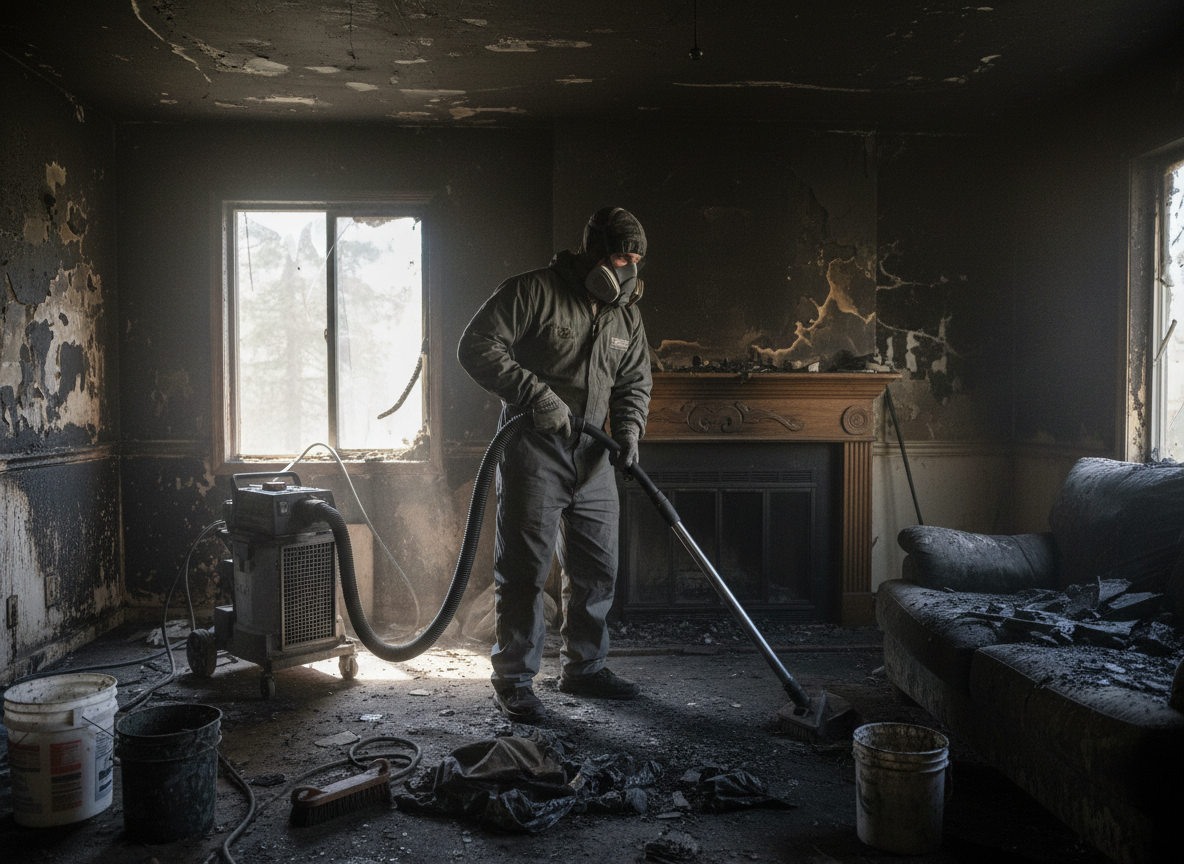
HEPA vacuuming and pH-neutral cleaning of all surfaces before any demolition begins.
- 3
Structural Drying and Odor Treatment
Air movers, dehumidifiers, and hydroxyl generators address moisture from snow melt and embedded smoke.
- 4
Reconstruction and Clearance
Replace affected materials, restore finishes, and verify air quality before reoccupancy.
Pricing
Upfront written quotes provided after on-site inspection; final cost depends on square footage affected and whether contents require off-site cleaning.