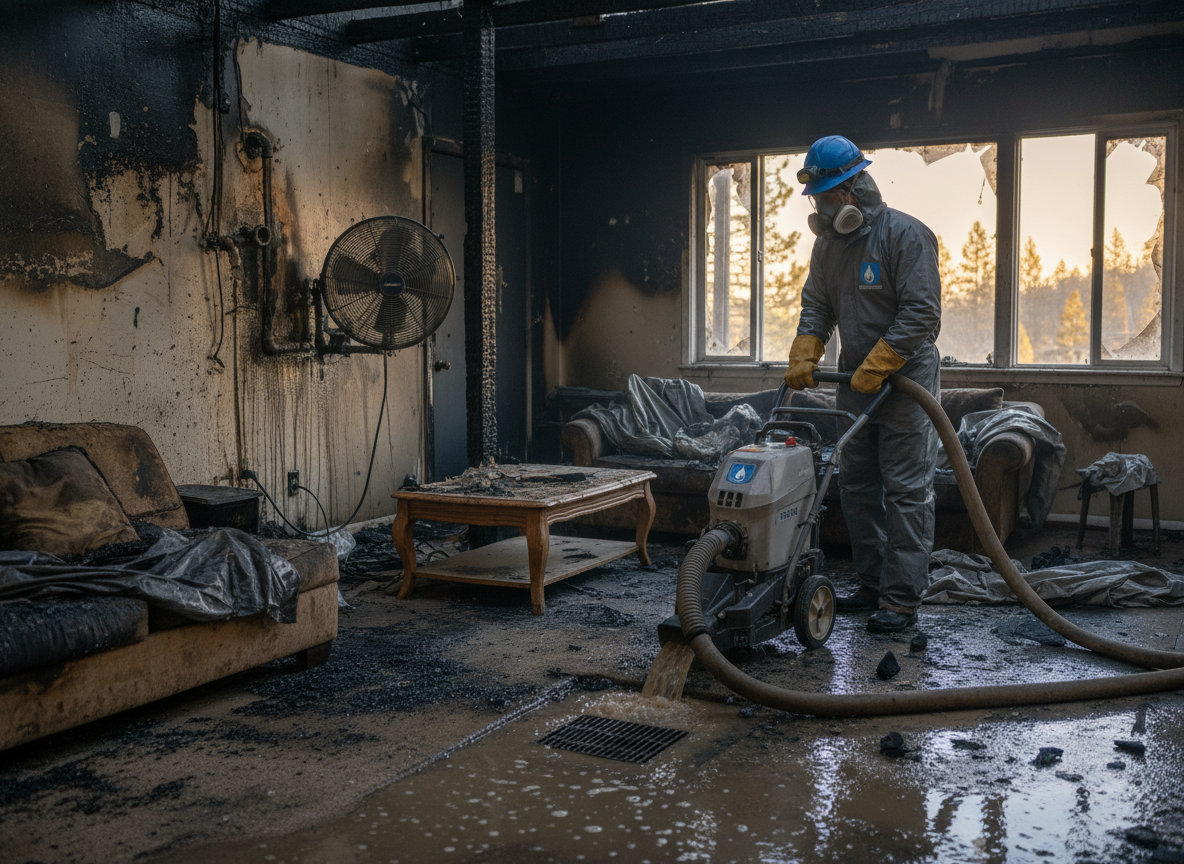
Blue Jay sits in the San Bernardino National Forest where wildfire scars on steep slopes often trigger debris flows once winter snow melts or spring rains arrive. Burned soil repels water, sending runoff straight into crawl spaces and foundations along Highway 189. Restoration crews must first stabilize charred framing, then extract water that has wicked into particleboard subfloors common in 1960s and 1970s cabins before mold sets in behind knotty-pine paneling.
Lake Arrowhead and Running Springs properties frequently combine smoke residue with later moisture intrusion because metal roofs and poor attic ventilation trap condensation after fire-suppression water is pumped through ceilings. Technicians remove saturated insulation, treat remaining timbers with antimicrobial rinses, and install temporary dehumidification that accounts for the rapid temperature swings between warm summer afternoons and freezing nights at elevation.
San Bernardino County building codes require new electrical and plumbing rough-ins after significant fire and water events, especially when knob-and-tube wiring still exists in older Blue Jay homes. Crews coordinate inspections while drying proceeds so homeowners avoid repeated drywall removal. Seasonal timing matters: jobs started before first snow must include temporary roof tarping rated for heavy snow load to prevent additional interior flooding.
Technician insight
In Blue Jay, the thing that catches most people out with Fire and flood restoration is how quickly snowmelt on burned slopes above Highway 189 pushes water under older cabin foundations. Homeowners often focus only on the fire char and miss the hidden saturation in crawl spaces that appears weeks later when temperatures swing.
Post-Fire Snowmelt Intrusion
A Blue Jay cabin sustained roof and wall fire damage in late fall. Winter snow melted and ran under the foundation, saturating subfloor framing. We extracted the water, treated the timbers, and dried the structure through freeze-thaw cycles before rebuilding to county standards.
How it works
- 1
Emergency Board-Up and Water Extraction
Secure the structure against weather and remove standing water from fire-suppression efforts before mountain temperatures drop.
- 2
Smoke and Soot Removal
Clean charred surfaces and HVAC systems using techniques suited to the resins found in local pine and cedar construction.
- 3
Structural Drying and Monitoring
Deploy industrial drying equipment while tracking moisture in walls and floors through daily readings during snowy periods.
- 4
Rebuild and Code-Compliant Repairs
Replace damaged materials and pass county inspections for electrical and plumbing updates common after combined fire and water events.
Pricing
Pricing varies with the extent of fire damage, subsequent water intrusion, and whether snow or freeze-thaw cycles complicate drying.