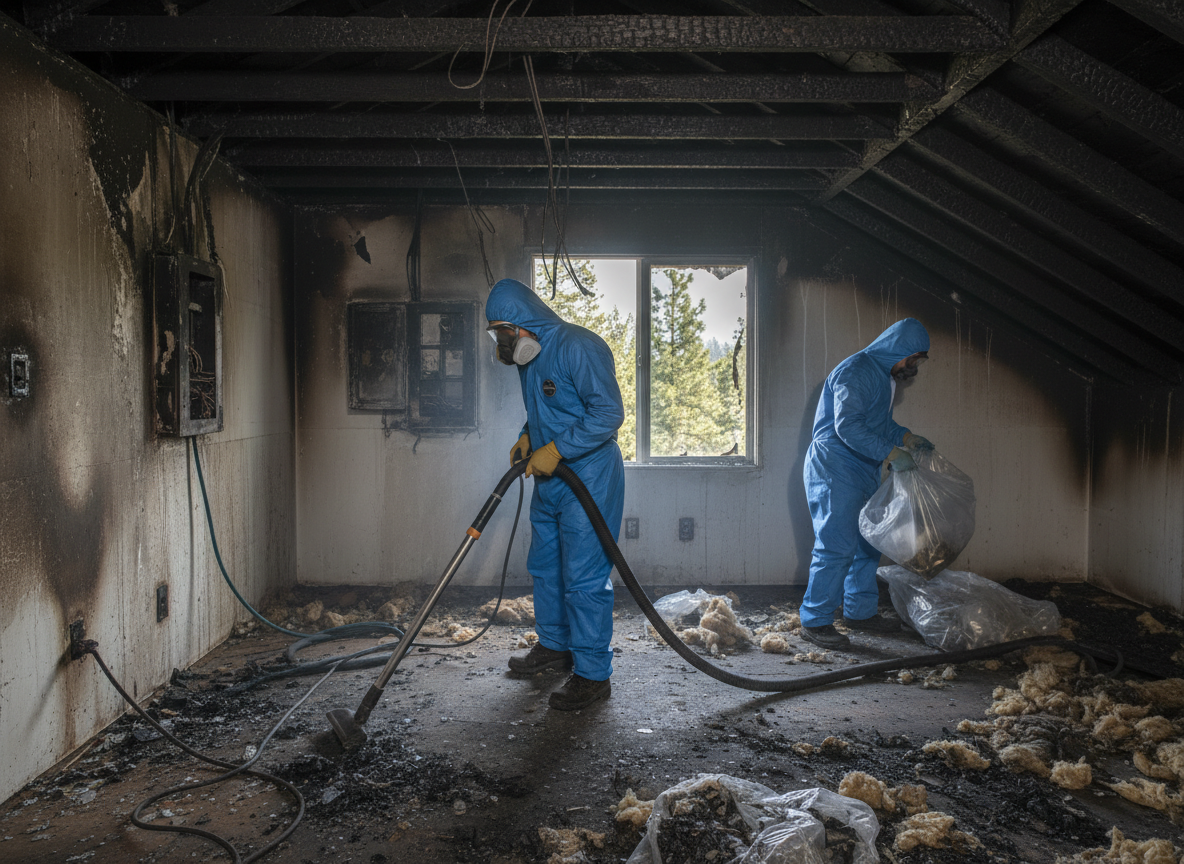
Electrical fires in Blue Jay often start in outdated knob-and-tube or aluminum wiring common in 1960s-1980s cabins near Lake Arrowhead. Once the arc ignites insulation, soot travels through open truss ceilings and travels upward with the chimney effect created by steep terrain. Winter snow loads on roofs can trap heat and accelerate charring along rafters while also limiting access for initial suppression. Technicians must map every circuit back to the main panel before any cleaning begins, because hidden faults in crawl spaces can re-energize during restoration.
Soot from electrical fires is acidic and bonds to metal switch plates and copper runs faster than typical wood-smoke residue. In San Bernardino County mountain air with low humidity in summer and sudden freeze-thaw cycles in winter, this residue pulls moisture and creates ongoing corrosion on outlets and junction boxes. Crews use HEPA vacuums followed by pH-neutralizing washes on all non-porous surfaces and remove affected insulation batts rather than attempting surface cleaning. Any remaining wiring that shows pitting or discoloration is tagged for licensed electrician replacement before drywall repair.
Access challenges multiply in Blue Jay because many homes sit on narrow switchback driveways that become impassable after the first heavy snowfall. Equipment must be staged at the address on CA-189 and carried in, extending project timelines when electrical panels are located in detached garages or under decks. Odor neutralization requires multiple applications of encapsulants because the porous wood siding and cedar shake roofs common here continue to off-gas even after visible soot is removed.
Technician insight
In Blue Jay, the thing that catches most people out with Electrical fire cleanup is how snowmelt seeps into wall cavities along the steep lots off CA-189 and re-wets soot that was already neutralized, forcing a second round of treatment weeks after the initial job.
Wiring Fault In 1978 Cabin Off Blue Jay Village
An overloaded aluminum circuit behind the kitchen panel ignited during a January cold snap. Soot had traveled through the open ceiling into two bedrooms. We isolated power at the meter, removed affected insulation, neutralized all surfaces, and coordinated new copper runs before the next storm closed the roads.
How it works
- 1
Initial Safety And Scope Assessment
Technicians arrive 24/7, verify power isolation at the meter, and document every affected circuit while noting snow or terrain constraints around the property.
- 2
Soot Containment And Source Removal
Plastic barriers isolate rooms, charred wiring sections are cut out, and all loose soot is HEPA-vacuumed before any wet cleaning begins.
- 3
Neutralization And Deep Cleaning
Acidic residues are treated with pH-balanced solutions on metal and hard surfaces; insulation and porous materials showing char are removed.
- 4
Verification And Handover
Air quality readings and visual inspection confirm residues are gone, then a licensed electrician is coordinated for final wiring repairs before re-energizing.
Pricing
Upfront quotes issued after on-site inspection; cost driven by extent of wiring runs, number of rooms impacted, and seasonal access conditions.