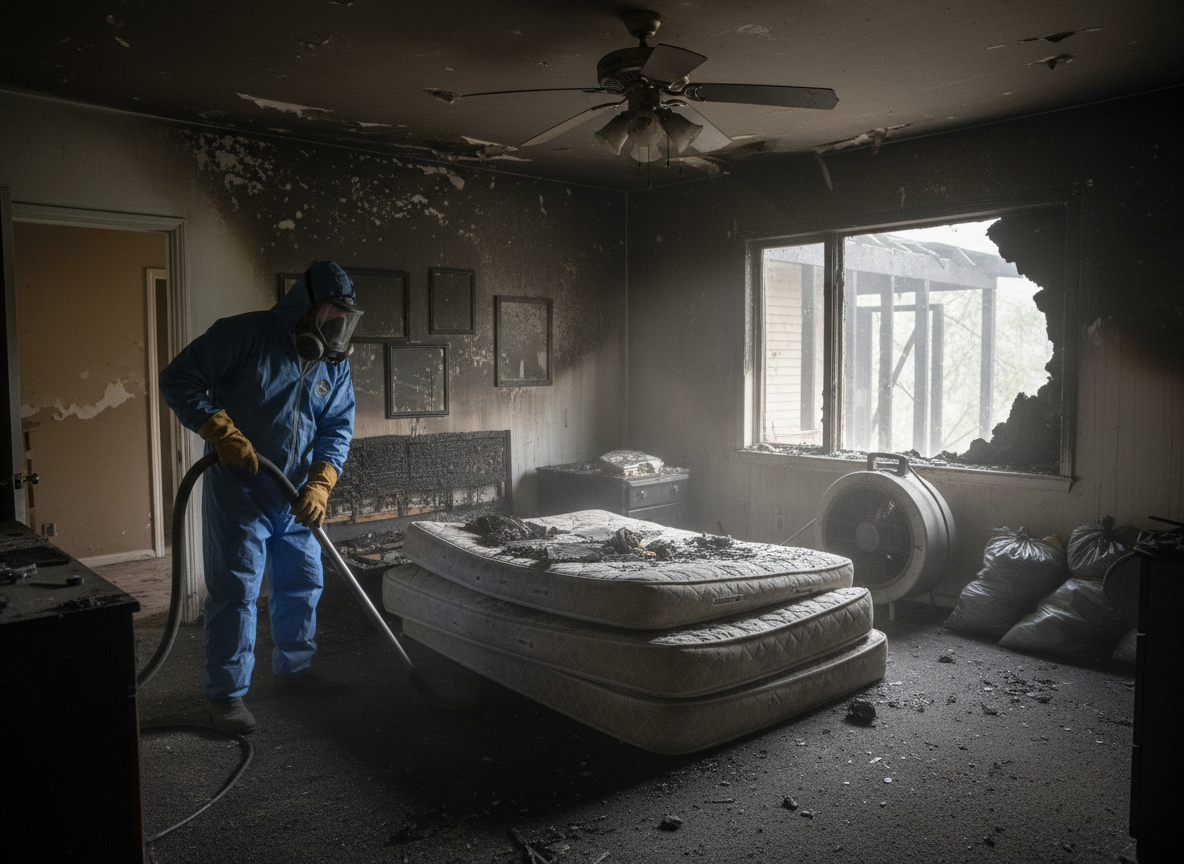
Blue Jay bedrooms often sit in older wood-frame cabins built before modern fire codes, where lath-and-plaster walls and pine paneling let smoke travel through hidden cavities to adjacent rooms. Winter snow loads can trap soot against cold roof decks, while summer dryness lets embers reignite in insulation. Crews must pull carpet pads and baseboards immediately because mountain humidity swings turn wet soot into permanent stains on hardwood floors common in Running Springs and Lake Arrowhead homes.
After a contained bedroom fire, the biggest risk is alkaline soot etching into drywall and melting synthetic carpet fibers. We isolate the room with negative air, remove charred studs, and treat remaining surfaces with pH-neutral cleaners before sealing. San Bernardino County requires permits for any structural member replacement, so we document every cut joist and coordinate inspections the same day to keep the job moving.
Edge cases include fires that start in electric blankets or space heaters placed too close to curtains, leaving invisible residue inside HVAC returns that serve the whole house. We pull registers, clean ducts to the furnace, and test for carbon monoxide pockets trapped in wall cavities. Homeowners in Blue Jay frequently discover that insurance only covers visible char, so we photograph hidden damage behind outlets before drywall goes back up.
Seasonal Considerations
Mountain winters bring snow that delays exterior debris removal while summers accelerate oxidation of metal fixtures left in soot. We stage equipment at our CA-189 location so crews can reach Blue Jay addresses within the hour regardless of weather.
Technician insight
In Blue Jay, the thing that catches most people out with Bedroom fire damage cleanup is how quickly snowmelt from the roof leaks into soot-soaked ceilings once we open the room. Older cabins around Lake Arrowhead have no vapor barriers, so one warm day after a storm turns hidden char into black streaks that run down interior walls.
Bedroom Heater Fire in Blue Jay Cabin
A space heater ignited bedding in a 1970s cabin off CA-189. Smoke had migrated through the open ceiling into the living room and HVAC. We removed the burned subfloor section, cleaned ducts to the unit, and sealed all surfaces before drywall replacement. The family moved back in four days later with no odor remaining.
How it works
- 1
Secure and Assess
Board openings, set containment, and photograph every surface before any removal begins.
- 2
Remove Charred Materials
Cut out burned studs, carpet, and insulation, bagging debris for county landfill drop-off.
- 3
Clean and Neutralize
Apply pH-neutral agents to walls, ceilings, and HVAC components, then HEPA vacuum all surfaces.
- 4
Drying and Sealing
Run dehumidifiers, confirm moisture levels, and apply stain-blocking primer to prevent bleed-through.
Pricing
Cost depends on square footage affected, whether structural members need replacement, and how far smoke traveled into the HVAC system.