Blue Jay sits at elevation in the San Bernardino Mountains where older cabins and homes often feature older wood framing, knob-and-tube wiring, and cellulose or fiberglass insulation that readily holds smoke odor. After an attic fire, soot travels through roof vents and ridge lines, settling deep into rafters and ceiling joists. Winter snow loads add weight to already compromised roof structures, so restoration crews must first verify load-bearing integrity before any cleaning or insulation removal begins. Warm summer months bring dry conditions that can re-ignite hidden embers if not fully extinguished during initial response.
Homes near Lake Arrowhead and Running Springs frequently have limited attic access through small scuttle holes or knee-wall spaces, making full inspection and debris removal slower than in newer tract housing. Smoke residue on electrical boxes and HVAC ducts requires careful disconnection and cleaning to prevent future corrosion. San Bernardino County building codes require permits for structural repairs when fire affects more than ten percent of framing members; crews coordinate these inspections to keep projects moving without delays from seasonal road closures during snow events.
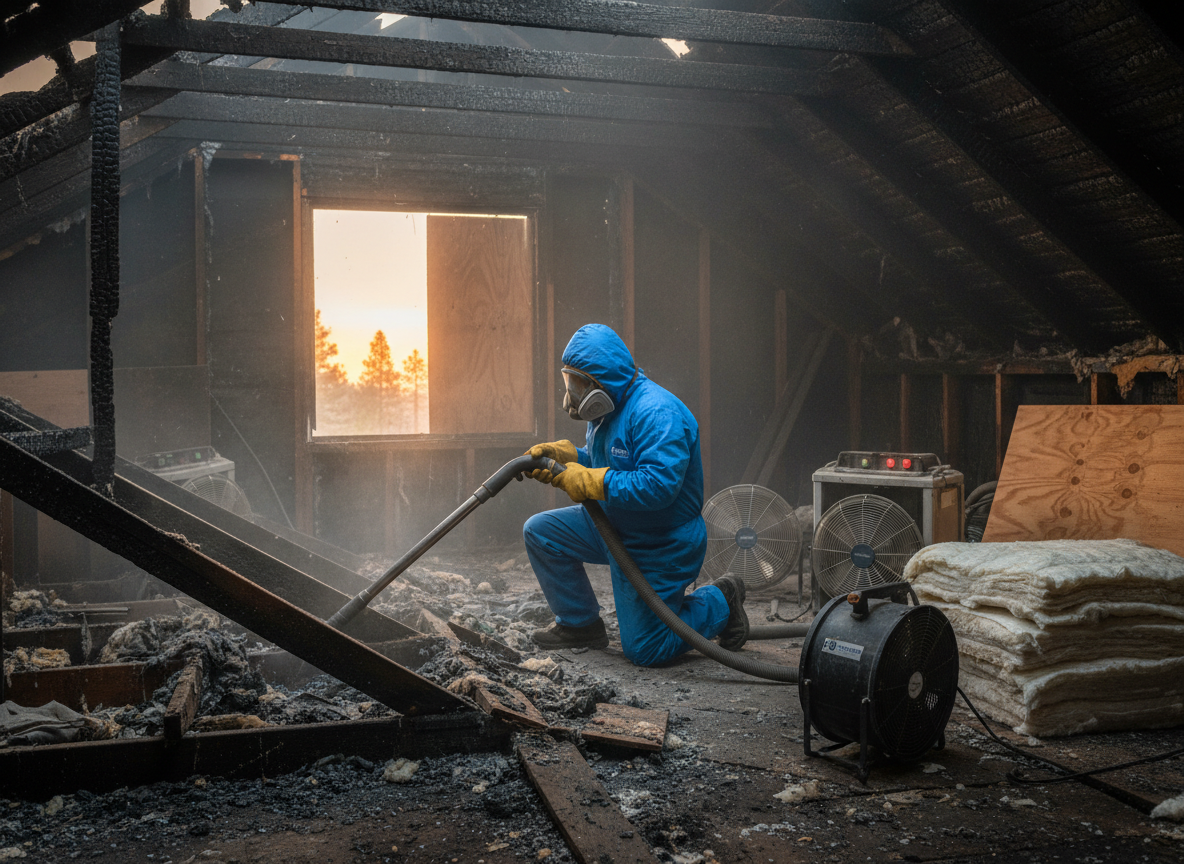
Restoration includes removing charred insulation, HEPA vacuuming soot from every rafter, and applying odor-sealing primers rated for high-humidity mountain environments. Replacement insulation must meet current R-value standards for the climate zone while allowing proper attic ventilation to prevent condensation under snow-covered roofs. Homeowners in Blue Jay often discover hidden damage weeks later when melted snow reveals water intrusion through previously sealed roof penetrations, so follow-up checks are scheduled after the first thaw.
Technician insight
In Blue Jay, the thing that catches most people out with attic fire restoration is the heavy winter snow load combined with older roof decking. Homeowners around Lake Arrowhead often assume once the fire is out the job is simple, but we have to shore up sagging rafters before we can safely remove insulation, and any missed ember in the cellulose can smolder again when the first warm spell hits.
Blue Jay Cabin Attic Fire After Heavy Snow
A homeowner in Blue Jay reported smoke odor weeks after a small attic electrical fire. We found soot had migrated through ridge vents into the main living space and snow weight had stressed several charred rafters. After shoring the roof, removing all insulation, and sealing the decking, we replaced the insulation with higher R-value material suited to the mountain climate and passed county inspection before the next snowfall.
How it works
- 1
Emergency Board-Up and Safety Check
Secure the property and confirm no active fire or structural collapse risk in the attic space.
- 2
Detailed Inspection and Documentation
Map smoke migration paths through vents and assess insulation, wiring, and roof deck condition.
- 3
Soot Removal and Odor Treatment
HEPA vacuum all surfaces, apply thermal fogging or ozone where needed, and remove contaminated insulation.
- 4
Repairs and Final Clearance
Replace damaged framing or insulation, coordinate county inspections, and verify air quality before reoccupancy.
Pricing
Upfront written quotes provided after on-site inspection; final cost depends on attic size, depth of smoke penetration, and any structural repairs needed.