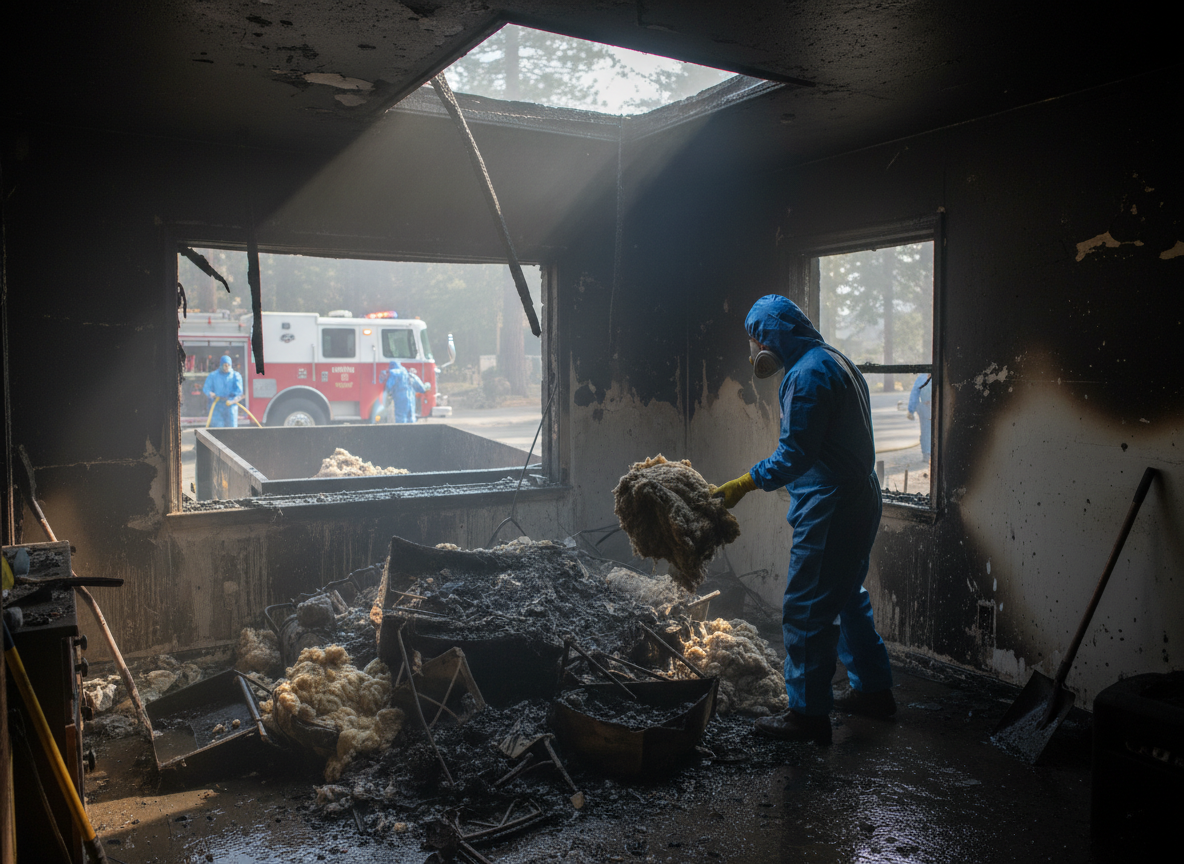
Apartment fire cleanup in Blue Jay demands careful handling of soot that penetrates porous materials common in older mountain apartments built near Lake Arrowhead and Running Springs. Warm summers accelerate odor development while snowy winters introduce moisture that can set smoke residues into drywall and insulation. Crews must isolate HVAC systems quickly to prevent redistribution through shared vents in multi-unit buildings throughout San Bernardino County. Failure to address these seasonal factors often leaves lingering smells that return once temperatures shift.
Wood-framed apartments typical in Blue Jay trap fine soot particles in wall cavities and under flooring, requiring removal of affected sections rather than surface cleaning alone. Terrain around CA-189 limits equipment access during winter storms, so crews stage containment barriers early and work in sections. San Bernardino regulations require proper disposal of contaminated debris to avoid runoff into local watersheds near Lake Arrowhead. Technicians test air quality at multiple stages to confirm residues are fully extracted before reassembly.
Edge cases include fires that start in one unit but migrate through shared attics common in Blue Jay complexes. Snow melt can carry soot into lower levels, creating secondary staining that appears weeks later. Work includes sealing off unaffected units to maintain habitability for neighbors while full cleanup proceeds.
Technician insight
In Blue Jay, the thing that catches most people out with Apartment fire cleanup is how snow melt seeps into older wood-framed apartments near Lake Arrowhead and carries soot into subfloors, creating hidden staining that only shows once summer heat returns.
Soot Migration Through Shared Vents
A kitchen fire in a Blue Jay apartment spread smoke into three neighboring units via aging ductwork. Crews found heavy residue in wall cavities after winter moisture set the particles. They isolated the HVAC, removed affected insulation, and scrubbed all surfaces before testing cleared the building.
How it works
- 1
Initial Assessment
Technicians inspect all affected units and shared systems in Blue Jay apartments, documenting smoke migration paths through vents and wall cavities.
- 2
Containment Setup
Plastic barriers and negative air machines isolate the work zone to protect neighboring units from further soot spread during mountain weather changes.
- 3
Soot Removal
HEPA vacuums and specialized cleaners remove residues from surfaces, followed by removal of porous materials like carpet and insulation that hold odors.
- 4
Final Clearance
Air quality testing and odor checks confirm the space meets habitability standards before residents return.
Pricing
Upfront quotes based on square footage and depth of soot penetration; winter access adds time.