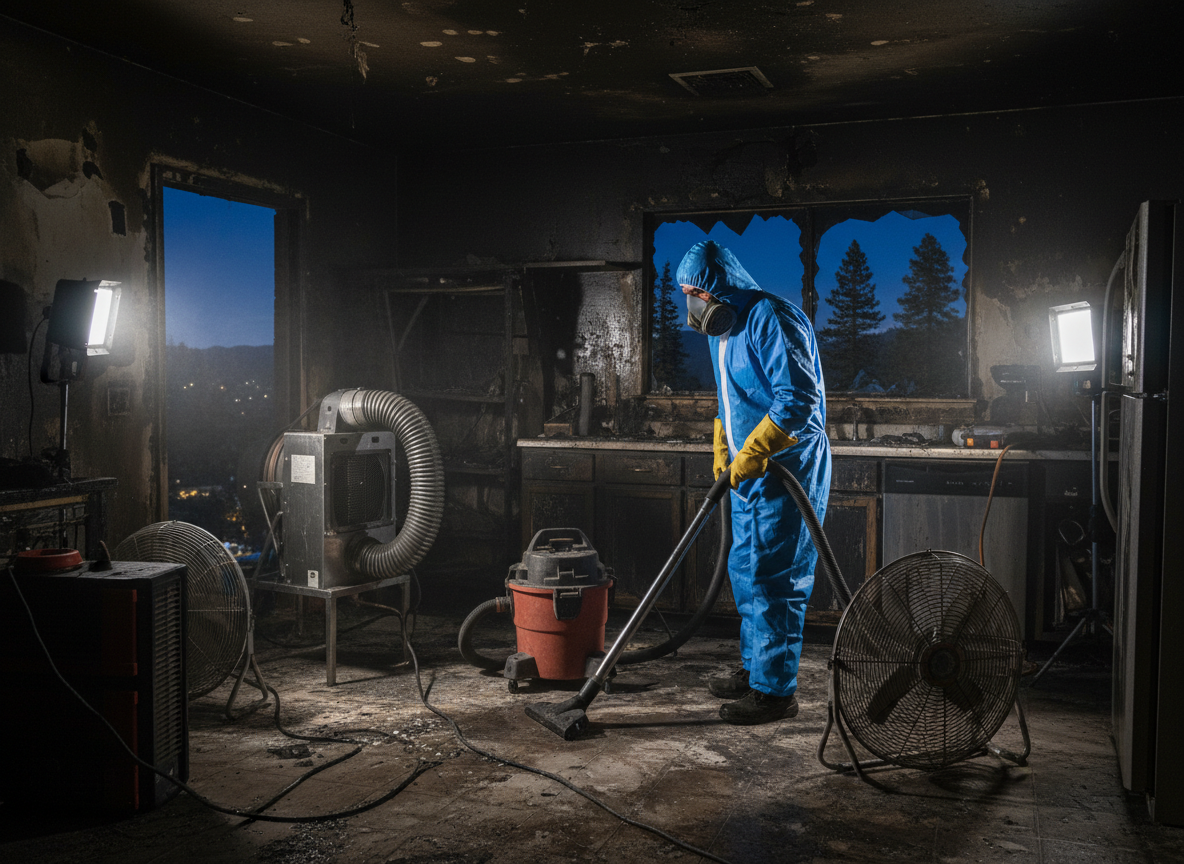
Blue Jay sits in the San Bernardino Mountains where older wood-frame cabins and homes built close to steep slopes face unique risks after a fire. Warm summer days can leave dry vegetation that feeds quick-spreading flames, while winter snow loads on roofs often hide hidden charring until melt-off. A 24 hour fire restoration crew must reach the site before shifting weather closes roads between Blue Jay and Lake Arrowhead, using portable heaters and dehumidifiers sized for the cold, damp conditions that follow.
Soot from burning pine and cedar penetrates unsealed log walls and attic spaces common in this area, requiring targeted cleaning rather than standard wipe-downs. Residues left behind can corrode metal flashing and HVAC components when temperatures swing from freezing nights to mild afternoons. Crews stage equipment at the 27264 CA-189 location to cut response time and avoid delays on narrow mountain roads when snowplows are running.
After initial suppression, water used by firefighters pools against foundations on sloped lots, raising the chance of secondary mold growth under floorboards. Restoration includes removing saturated insulation, drying wall cavities with air movers, and documenting every step for insurance adjusters who serve San Bernardino County properties.
Technician insight
In Blue Jay, the thing that catches most people out with 24 hour fire restoration is how quickly snowmelt drives water into already charred floor joists on sloped lots near Lake Arrowhead. Homeowners often think the fire is the only issue, but the combination of suppression water and freeze-thaw cycles turns minor char into structural rot within days if we cannot get equipment staged before the next storm.
Cabin Smoke Damage After Kitchen Fire
A Blue Jay cabin near Running Springs suffered a kitchen fire that sent soot through the open-beam ceiling into the attic. We found hidden char along rafters and water trapped under the subfloor from hose lines. Crews removed affected insulation, dried the cavities with cold-weather equipment, and restored the space without disturbing the surrounding snow load on the roof.
How it works
- 1
Emergency Dispatch
Call is answered 24/7 and a team is routed from the Blue Jay base to secure the site and prevent further weather-related damage.
- 2
On-Site Evaluation
Technicians inspect structural integrity, map smoke migration paths through attics and crawl spaces, and note snow or terrain obstacles.
- 3
Containment and Removal
Affected materials are isolated, charred debris is removed, and negative air machines capture lingering particulates before they spread to unaffected rooms.
- 4
Drying and Cleaning
Specialized equipment dries saturated wood and drywall while surfaces receive HEPA vacuuming and odor-neutralizing treatments suited to mountain humidity swings.
- 5
Final Verification
Air quality and moisture readings confirm the structure meets safety standards before homeowners return.
Pricing
Upfront quotes follow a full inspection; final cost depends on square footage affected, depth of soot in older construction, and any added drying time required by winter conditions.